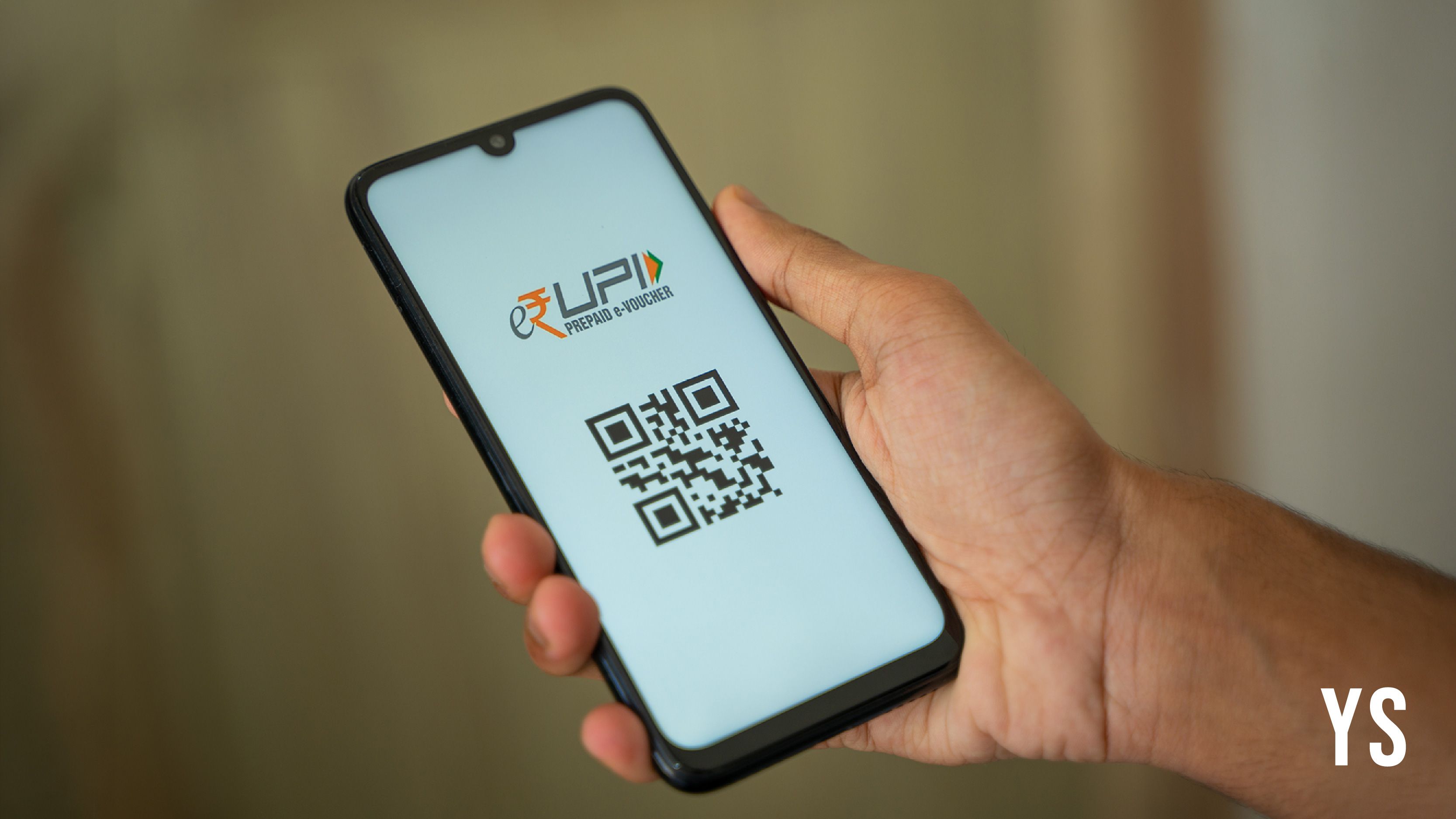
India’s financial infrastructure has spent the last decade making money move faster. The next decade could be about making financial assets move differently.
The scale of UPI is a useful starting point. In August 2026 alone, UPI processed over 24.5 billion transactions worth nearly Rs 29.8 lakh crore, according to NPCI. What made UPI transformative was not simply that payments became instant. It was that a common, interoperable rail allowed banks, fintechs and other participants to build services on top of it.
The next evolution of this infrastructure may extend beyond payments to the assets being bought, sold and settled.
Tokenisation essentially means creating a digital representation of an asset or financial claim on a programmable infrastructure. That asset could be a bond, a fund unit, a trade receivable, real estate or another real-world asset. The proposition is not merely to put an existing asset on a blockchain.
It is to reshape the legal foundations of how ownership, transfers, settlements and compliance can work when the asset and all of its rights and obligations themselves become digitally native, or as they say, on-chain.
India is already moving in this direction.
The Reserve Bank has been exploring tokenised forms of money through the e-rupee and wholesale applications of central bank digital currency. More recently, the RBI has conceptualised a Unified Markets Interface, a next-generation financial market infrastructure with the capability to tokenise financial assets and settlements using wholesale CBDC. The RBI has also highlighted the potential of tokenisation to improve market efficiency.
The securities market is showing similar movement. On September 10, 2026, SEBI announced the successful launch of its “Demat 2.0” pilot for tokenised corporate bonds. This is significant because it moves the conversation from experimentation towards testing tokenisation within a regulated market structure.
The opportunity is particularly interesting in fixed income. Bonds have defined cash flows, maturity dates and ownership records, making them a natural candidate for digitally native issuance and settlement. Tokenization could potentially enable more granular ownership, enhanced liquidity and the ability to automate certain lifecycle events that reduce friction between issuance, transfer and settlement.
But the larger opportunity lies beyond bonds.
Consider real estate. Today, ownership of a property is fundamentally indivisible from the perspective of most retail investors. A tokenised structure could, where legally and appropriately structured, represent fractional economic interests in an underlying asset. Similar models could potentially emerge around infrastructure, receivables or other productive real-world assets.
However, tokenisation does not automatically make an illiquid asset liquid. Creating a token is technologically easier than creating a trusted market for that token.
That distinction will determine whether tokenisation becomes meaningful infrastructure or remains a collection of pilots.
The first requirement is legal and regulatory clarity. Investors need to know exactly what a token represents, what legal rights attach to it, who maintains the definitive ownership record and what happens in the event of default, insolvency or a dispute. Does the ownership of the token get upheld in the courts of law? The technology can record ownership, but legal and regulatory frameworks must establish what that ownership means.
The second is interoperability. India’s payments success offers an important lesson here. UPI did not become a national rail because every institution built its own closed payment network. It became useful because different participants could connect through common standards. Globally, most countries are looking at public blockchain implementations that come with interoperability baked into the system, while some others are creating their own blockchain ecosystems and are looking to develop network effects that can make these systems viable for mass transactions. Regardless of the approach, the success of tokenised assets will an approach that goes beyond the interoperability that UPI brought, due to the global nature of such transactions. To make a truly efficient ecosystem, the underlying rails will have to be interoperable across wallets, custodians, registries, exchanges, settlement systems and regulated financial institutions across the world.
The third is institutional trust.
Tokenisation changes operational processes across the asset lifecycle. Issuers, investors, custodians, depositories, exchanges, banks and regulators must be able to rely on the same underlying records and controls. Cybersecurity, key management, identity, recovery mechanisms and auditability therefore become financial-market infrastructure issues, not merely technology issues.
This is also where India’s existing digital public infrastructure could provide an advantage. The country has already demonstrated that identity, payments and data-sharing infrastructure can create common rails on which private innovation can scale. The next challenge is applying the same principles to financial assets while preserving the safeguards expected of regulated markets. That is why India’s approach should not be about replacing existing financial infrastructure with blockchain for its own sake. The more useful question is how to create a programmable infrastructure ecosystem that is scalable globally and can enable global infrastructure players to compete and build efficiencies.
UPI demonstrated that digital financial infrastructure becomes powerful when it is interoperable, trusted and built for scale. Tokenised assets will have to meet the same test.
If the next generation of India’s financial infrastructure can combine the trust of regulated markets with the programmability of digital assets, the result may be more consequential than simply faster settlement. It could change how assets are issued, owned, transferred and accessed.
The transition from UPI to tokenised assets, therefore, is not really a transition from payments to blockchain. It is a broader shift from digitising transactions to digitising the financial assets and processes behind those transactions.
That could be the next chapter of India’s financial infrastructure story.